
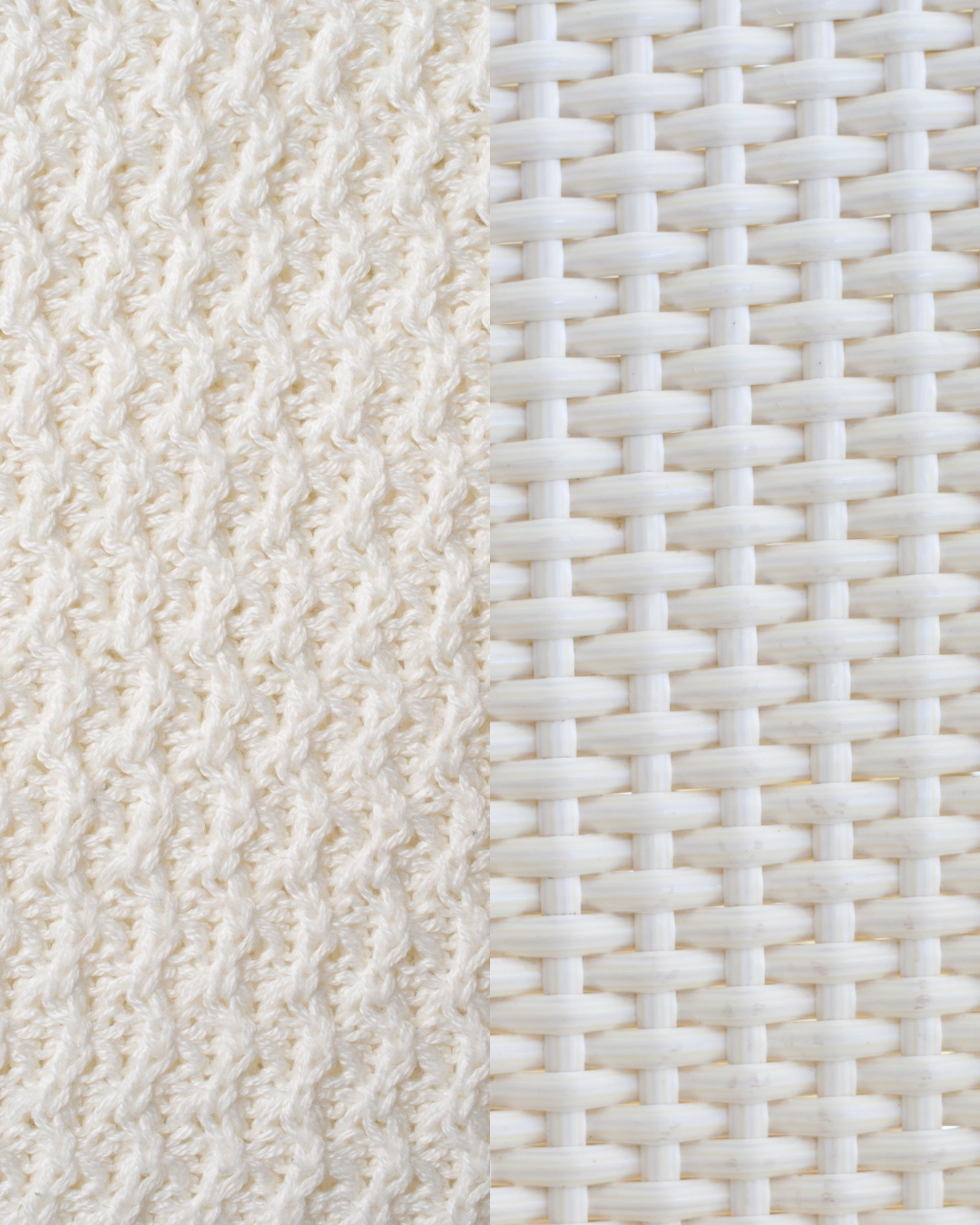
Understanding how materials are built is essential for those who design, develop or produce clothing. The choice between knitwear and fabric directly affects fit, comfort, performance, sustainability and perception of the finished garment. With this guide we want to offer a clear and technical overview of the two main families of materials in the fashion world, providing concrete criteria for choosing consciously from the early stages of product development.
Download our PDF guideHow they are built: two techniques, two logics
Knitwear
Knitwear was born from a single continuous thread What forms a series of rings intertwined with each other.
The result is a three-dimensional structure, flexible and naturally elastic, capable of adapting to body shapes and accompanying its movements.
Modern knitting machines, such as Shima Seiki and Stoll, make it possible to create panels or garments that are already shaped (Full-fashioned), reducing the number of production steps, improving fit and limiting material waste.
It is important to remember that the term knitwear is a broad concept and includes different processing techniques, including:
- cropped jersey
- Embroidered jersey
- Wholegarment sweater
- circular sweater (jersey)
Each of these has specific characteristics and different applications, which will be explored in the next articles of Knit Glossary.
Fabric
The fabric, on the other hand, comes from the intertwining of two distinct wire systems:
- Warp, arranged vertically
- woof, arranged horizontally
The two wires cross perpendicularly on a frame, generating a flat, compact and dimensionally stable surface.
This structure makes the fabric particularly suitable for garments that require Line accuracy, Holding the shape and structure, such as shirts, jackets, tailored pants and outerwear.
In summary
The fundamental difference is constructive:
- The knitwear It is built With rings And it was born in volume
- the woven It is built At crossroads And it was born on a piano
This distinction underlies everything that follows.
Property and behavior compared
The behavior of the two materials is profoundly different even once worn.
La knitwear it is a 'living' material:
moves with the body, adapts, follows the shapes and returns a feeling of comfort and naturalness.
The woven, on the other hand, maintains the shape given to it during the design phase:
defines the silhouette, structures the garment and guarantees stability over time.
This difference directly affects:
- The fit
- The comfort
- freedom of movement
- the qualitative perception of the garment
Applications and intended use
Each technique meets different needs and is applied in specific areas.
When to choose knitwear
Knitwear is ideal for garments that require:
- softness and comfort
- elasticity and adaptability
- freedom of movement
Typical applications:
- t-shirts, polos and tops
- sweaters, cardigans and turtlenecks
- loungewear, sportswear and activewear
When to prefer fabric
The fabric is more suitable for garments that need:
- structure
- Line accuracy
- dimensional stability
Typical applications:
- shirts and pants
- tailored blazers, jackets and outerwear
- technical clothing and accessories
In a complete wardrobe, the two categories coexist:
knitwear dresses the body, the fabric defines its shape.
Sustainability and production cycle
One of the most significant advantages of knitwear is the possibility of developing garments Low or no waste, especially when using techniques such as Full-fashioned or Wholegarment.
In these cases, the panel - or even the entire garment - is produced directly in the final shape, without the need for cutting, drastically reducing the waste of material.
The fabric, on the other hand, always requires a step of cutting and placing models, which inevitably generates waste and a greater consumption of resources.
With a view to circular and responsible design, knitwear represents one of the most efficient solutions consistent with the principles of Contemporary Made in Italy.
Conclusion
Knitwear and fabric are not alternatives, but complementary production approaches.
The first is fluid, adaptable and dynamic.
The second is structured, stable and defined.
Knowing the differences means designing more consistent, functional and sustainable garments, avoiding technical choices that can compromise quality, time and costs.
In Max Company Every day we combine research, innovation and tradition to transform yarn into tailor-made solutions for high-end brands.
From concept to final production, we support designers and product developers in the development of knitwear collections that combine creative value and operational reliability.
Do you want to learn more?
Find out how our team can support you in the technical-creative development of your next knitwear collection.
