
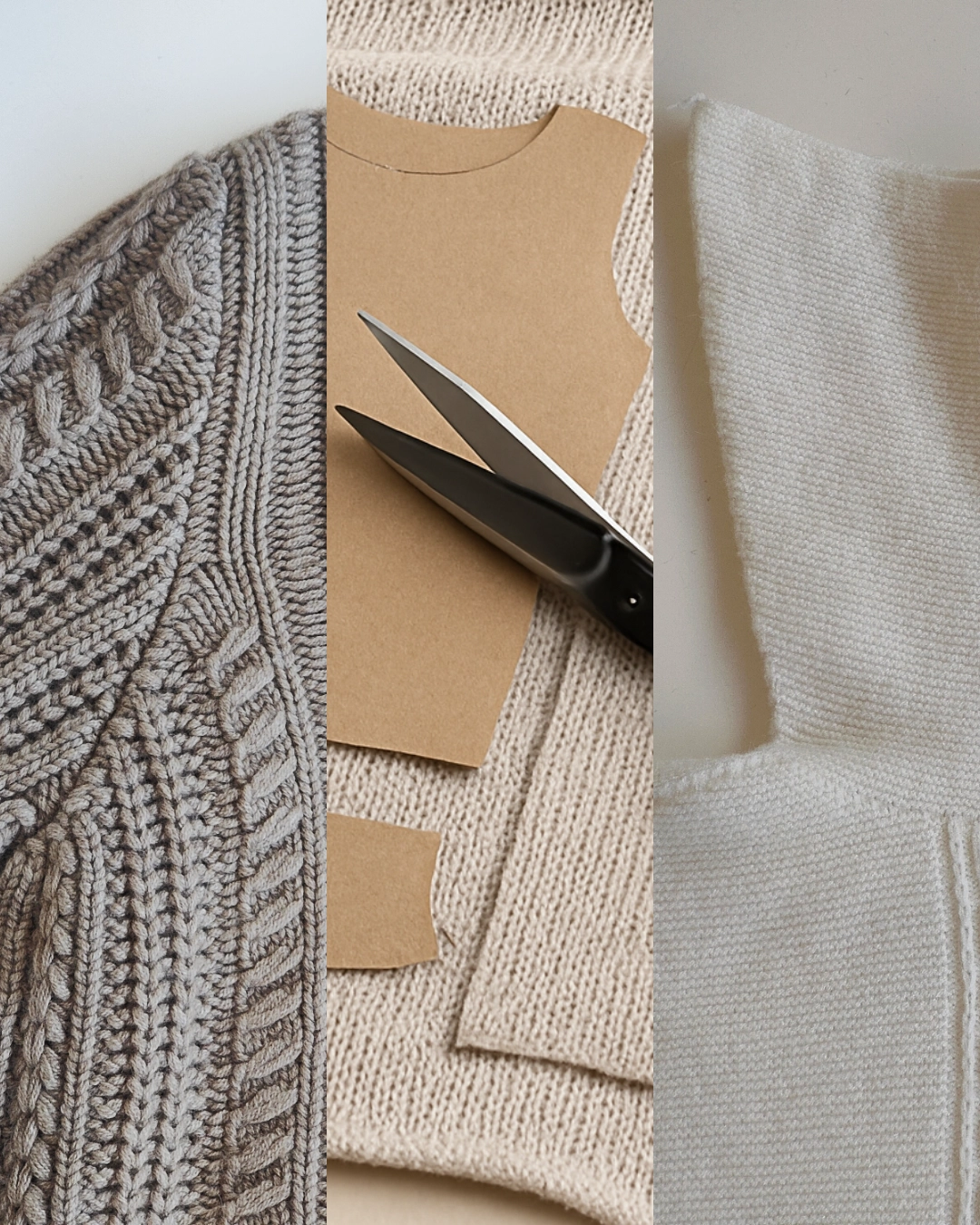
In the world of knitwear, the final result of a garment does not depend only on the yarn or stitch used, but above all on how it is constructed. Fully-fashioned knitwear, cut & sewn knitwear and WholeGarment represent three distinct production approaches, each with specific implications for fit, comfort, sustainability, lead times and production costs. Understanding the differences between these techniques is essential for designers, product developers and brands aiming to create coherent, reliable and industrially viable collections. In this Knit Glossary guide by Max Company, we analyse the main knitwear construction methods, explaining how they work, the advantages they offer, and what factors influence the choice of the most suitable technique for each project.
Download our gauge guideFully-Fashioned Knitwear
Fully-fashioned knitwear is produced by shaping each panel directly on the knitting machine through increases and decreases.
No cutting is involved: the garment takes shape during the knitting process itself.
The panels are then assembled using linking (rimagliatura), a technique that joins stitches one by one, creating flat, thin and almost invisible seams.
Key features
- Direct shaping during knitting
- No material waste
- Assembly through linking
Advantages
- More accurate fit
- Higher perceived quality
- More sustainable process compared to cut & sewn
Limitations
- Longer development times
- Requires advanced programming
- Higher prototyping costs
Typical applicationsSweaters, cardigans, turtlenecks, tailored knitwear, mid- to high-end and luxury knit collections.


Cut & Sewn Knitwear
Cut & sewn knitwear is the construction method closest to woven garment logic.
Knit panels are produced as flat fabrics (rectangular panels or basic shapes), then cut according to a pattern and assembled using industrial sewing machines.
It is a fast and flexible process, often chosen when speed or cost control is the main priority. However, compared to other knitwear techniques, it involves material waste and offers lower structural precision.
Key features
- Knit fabric produced as a continuous panel and then cut
- Visible seams (overlock, cover stitch)
- Fast and industrially simple process
Advantages
- Lower production costs
- Suitable for small runs, testing phases or fast capsules
- Can also be produced on circular knitting machines
Limitations
- Yarn waste due to cutting
- Less precise fit
- Seams can feel stiffer and more visible
Typical applicationsT-shirts, sweatshirts, basic knitwear, oversized garments, jersey and lightweight knit fabrics.


WholeGarment Knitwear (Seamless Knitwear)
WholeGarment technology allows the garment to be produced entirely on the machine as a single three-dimensional piece.
Body, sleeves and neckline are knitted together, with no seams.
It represents the most advanced solution in terms of technology and sustainability, but requires complex 3D programming and comes with certain design limitations.
Key features
- Finished garment produced directly on the machine
- No seams
- Zero yarn waste
Advantages
- Maximum comfort
- Highly sustainable process
- Ideal for technical and seamless garments
Limitations
- High programming costs
- Less formal freedom compared to fully-fashioned knitwear
- Not suitable for all design concepts
Typical applicationsActivewear, seamlesswear, technical underwear, ergonomic garments, high-tech knit capsules.


Which technique should you choose?
There is no universally “best” technique, the right choice always depends on the project.
Key factors to consider include:
- Garment type
- Required level of fit and precision
- Desired comfort and seam construction
- Balance between speed and waste reduction
- Budget and production scale
In summary
- Fully-fashioned knitwear → quality, fit and durability
- Cut & sewn knitwear → speed and cost efficiency
- WholeGarment → extreme comfort and sustainability
Need a partner to develop your knitwear?
Every knitwear garment starts with a conscious technical choice.
At Max Company, we support designers and brands in selecting the most suitable construction method for each project, balancing aesthetics, technical requirements and industrial feasibility.
From concept to final production, we help develop reliable, coherent and high-level knitwear collections.
Get in touch with our technical and creative team to develop your next knitwear collection.
